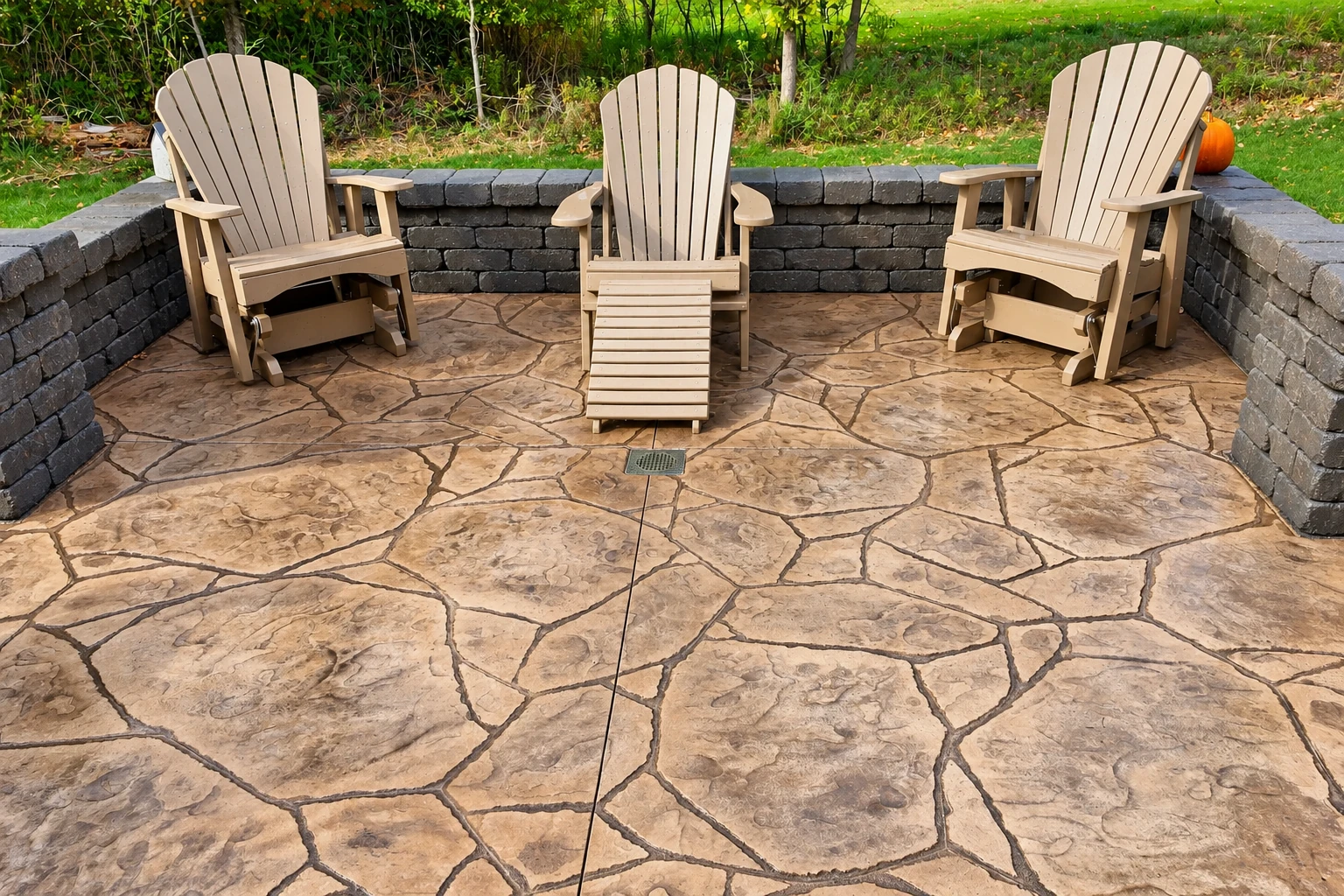
Slab foundation building in Tacoma WA - a level floor on firm, packed ground
Not sure your lot can take a slab? We check the slope and soil first, then build on ground that's dug out and packed.
Book a look at your building lot
We walk the lot, check the slope and soil, and talk through your building timeline.
Should I build on a slab foundation in Tacoma?
Slab foundation building in Tacoma means we pour concrete straight onto level, well-packed ground, so one slab serves as both your building's foundation and its floor. When the ground under it is right, you get a flat, solid floor to frame on.
Maybe you're putting up a house, an addition or a shop, and a slab came up because it's the simpler way to go. What moves the price is how much digging and packing it takes to get your ground level and firm, the size and thickness of the slab, and what goes under and around it. The schedule turns on the weather around pour day, any soils report you're still waiting on and the curing wait before framing can start. Your written estimate gives you the figure for your own lot. We're based in Tacoma and work in the cities around it in Pierce County and south King County, so if you're not sure we come out your way, just ask.
How we build a slab foundation
First I check whether the lot is level enough for a slab at all, and if you have a soils report, we build the plan around it instead of guessing. I also look at where water runs on the lot so it heads away from the slab and not under it. Then our crew digs the soft topsoil out down to firm ground and packs the base in layers, because a base that's only raked level settles with the dirt and takes the slab with it. We clear out rocks and debris, set the forms and tie in rebar, the steel inside the slab that holds the concrete together if it does crack. We plan the pour away from the hottest part of the day so the top doesn't end up weak and dusty, and we cut control joints, shallow grooves that give the slab a straight line to crack along, before it's had a chance to crack on its own. After that it cures, which is the slow hardening that sets how strong it gets. If a budget has to give somewhere, I'd rather trim the finish than the base, because nobody sees the base on day one but it decides how your slab holds up for years.
A slab is one of several ways to put a building on the ground, and when your lot or plans point another way, foundation installation covers foundations built on walls and footings. Property owners putting up a shop or rental on a slab often need room for vehicles too, and concrete parking lot building is flatwork, our word for concrete laid flat on the ground, that starts with the same kind of packed base.
What shapes slab foundation building in Tacoma
Pierce County's design criteria set the frost depth at 12 inches below grade for all low-land areas, which is how deep the ground is counted on to freeze, and the slab design has to account for it. The same criteria assume a default soil bearing value, meaning how much weight the ground is counted on to carry, unless a licensed geotechnical engineer gives you a soils report. When you have one, that report takes the place of the county's default in the design, so we build the plan around it. If you don't have one, I'll tell you what the default means for your slab.
What we see most on jobs around here is ground that stays wet for months and lots that are rarely as flat as they look, so I check how much the lot falls before we talk about a slab. We run into the same thing on jobs in Lakewood and Parkland.
Why call us for a slab
I write your estimate myself
I come out, walk the lot and write the estimate, and once work starts our crew does it with me on site running it. The person who saw your slope and soil is the one making the calls on pour day.
Fully licensed and insured
Washington requires every construction contractor to register with the Department of Labor & Industries, and you can look us up before you sign. That way you're not just taking our word for it.
Sloped and tight lots since 2017
We've been in business since 2017, and we're best known for the jobs other people aren't sure how to start, like a sloped lot or a tight backyard. On a slab, that matters, because the hard part is usually getting the ground right before any concrete shows up.
- Phone
- (253) 354-0081
- Hours
- Mon–Sun: 7 AM–10 PM
- Location
- Tacoma, WA 98402
Have your lot's slope, any soils report and the timing you're hoping for handy, then call (253) 354-0081 or send us a note through our contact page.
Get a written slab estimate for your lot
Send the form and we'll reply within one business day to set a time for me to come see the lot. The estimate is free and done on site, with no obligation, and you get it in writing so you can take your time with it.
- Phone
- (253) 354-0081
- Location
- Tacoma, WA 98402
- Hours
- Mon–Sun: 7 AM–10 PM
- Credentials
- Fully licensed and insured.
Frequently asked questions
Will a slab foundation work on a sloped lot in Tacoma?
Sometimes, but a slab needs level ground throughout the property and well-packed soil, so a steep lot may be better off with another kind of foundation. I check how level your lot is before I suggest a slab, and if it isn't a good fit, we'll talk through foundation installation instead.
How much does a slab foundation cost in Tacoma?
We give you a written price after I've seen the lot, because the ground decides most of it. A slab usually goes in quicker and easier than other foundations, which can bring labor down a good deal, while extra digging and packing, soft soil or a bigger, thicker slab pushes the price up. Call (253) 354-0081 and I'll come out to look.
How long does a new slab take to cure before I can walk or build on it?
Guides for the Seattle area say a new slab should be walkable within 48 hours, though concrete takes about 28 to 30 days to fully cure. To be safe, heavier loads may wait a week, and that wait is usually what sets when framing can start.
Can a concrete slab be poured in cold weather in Tacoma?
Yes, but national guidance treats it as cold-weather concreting once the air falls to 40°F or is expected to drop below it while the fresh concrete is being protected, and the pour then needs extra steps to protect it. That shapes a winter schedule, so tell us your hoped-for timing early and we'll plan around the forecast.
Does a slab foundation need insulation in Washington?
Yes, Washington rules require insulation around the edge of both heated and unheated slab floors, either outside the foundation or inside the foundation wall, at a minimum level the state sets. National guidance says poorly insulated edges let heat escape into the soil, and a big gap between slab and room temperature can cause condensation that leads to mold. One barrier maker also says a properly installed vapor retarder under the concrete cuts down moisture moving up into the home.
How do I check that a concrete contractor is registered in Washington?
Look them up at ProtectMyHome.net or call 1-800-647-0982, where you can see whether they're registered and the amount of their bond. State law requires construction contractors to be bonded and insured as well as registered, so it's worth a couple of minutes before you sign anything.
Related concrete services
Foundation installation
If your lot slopes too much for a slab, or you'd rather have a crawlspace, this is where we cover foundations built on walls and footings.
Concrete parking lot building
A new shop or rental on a slab often means cars and trucks parked beside it, and a lot needs the same dug-out, packed base first.